
Test PDF Embedder and Hypothesis
This is embedded PDF[pdf-embedder url=”https://anotherchrishidden.commons.gc.cuny.edu/wp-content/blogs.dir/579/files/2022/11/Adjunct-Workload-Form-Fall-21.pdf”]
test markdown 2
Open Education Open Education is a term to describe the use of freely transferable educational resources
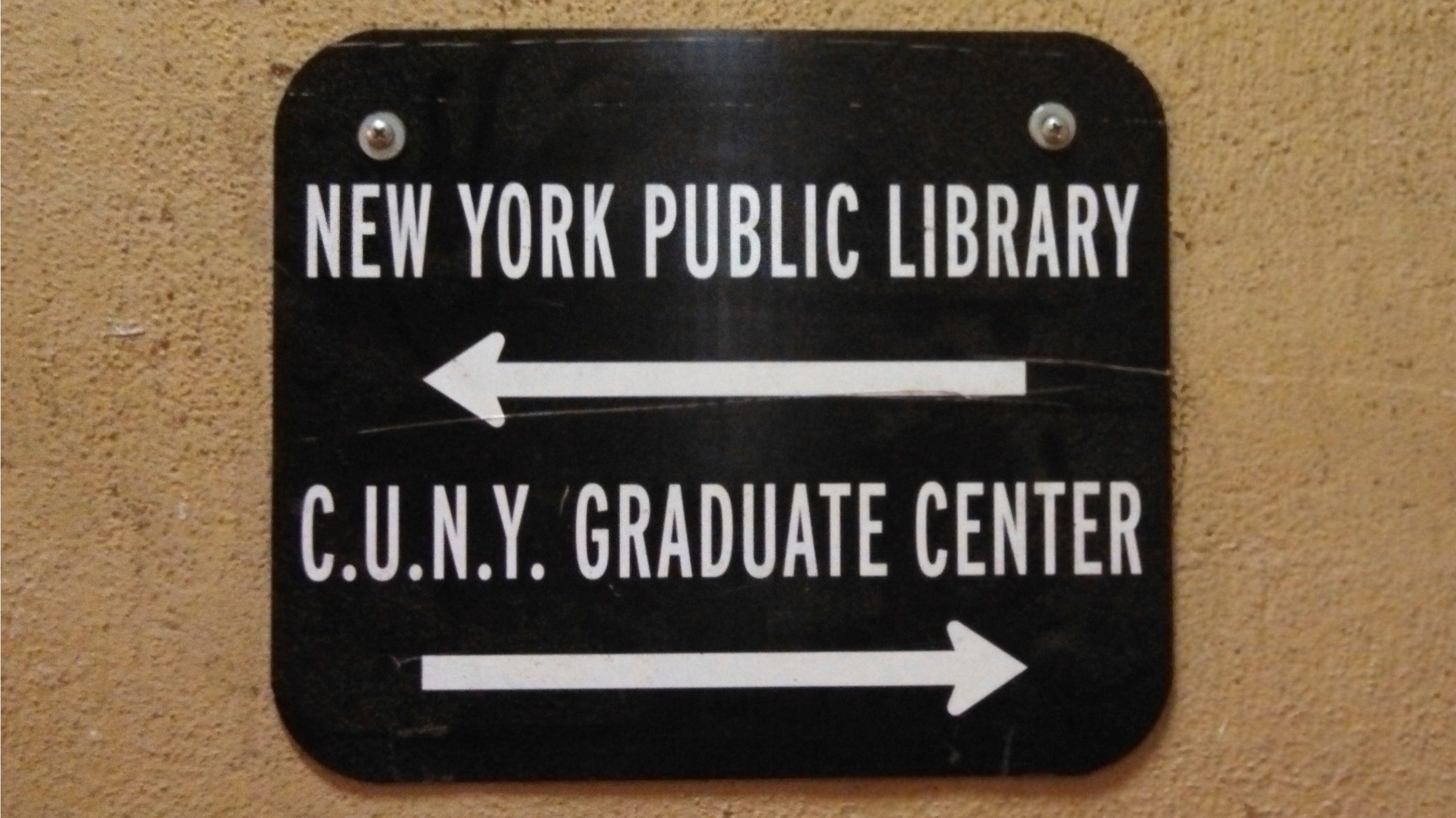
(https://wiki.creativecommons.org/What_is_OER%3F and http://en.wikipedia.org/wiki/Open_education). These materials and their use predate both invention (1968) and widespread consumer and commercial use of the internet (1994). However, with the adoption of the Internet and the increasing availability of valuable educational resources distributed in much the same way as FREE and Open Source Software (FOSS), the movement has gained significant institutional backing, materials and momentum.  # City University of New York Today’s City University of New York dates back to the 1847 founding of the Free Academy by Townsend Harris, an early champion of public education and a pioneering diplomat who was the United States’ first ambassador to Japan. With an inaugural class of 143 academically qualified young men, the Academy set upon a mission to, in Harris’ words, “let the children of the rich and the poor take their seats together and know of no distinction save that of industry, good conduct, and intellect.” The Academy quickly grew in reputation and enrollment and, as a new century approached, plans were approved for an expansive neo-Gothic campus uptown for what became known as the College of the City of New York. Twenty years after the first young men entered the Academy, a separate school for the education of teachers, the Female Normal and High School, later renamed Hunter College in honor of its founder Thomas Hunter, offered the same higher education opportunities to women. (http://www.cuny.edu/about/history.html) The University includes eleven senior colleges, seven community colleges, The Macaulay Honors College and five graduate and professional schools, located throughout the city’s five boroughs. CUNY GC was founded in 1961 to primarily concentrate on the awarding of doctoral degrees. The GC quickly expanded from 4 to 27 programs. It currently offers 42 different PhD degrees. The Earth and Environmental Sciences boasts a world renowned scholar on incarceration, Dr. Ruthie Gilmore (http://www.gc.cuny.edu/Faculty/Core-Bios/Ruth-Wilson-Gilmore) and the LIS Center (http://www.gc.cuny.edu/liscenter) whose mission is to explicitly study inequality.
  # Open Education at CUNY Clearly the institutional mission of CUNY and Open Education have much in common. There have been some pioneering efforts in FREE software and Open Education at CUNY and much more to come. Their are two flavors of CUNY’s contributions. First CUNY professors, administrators and students contribute to and maintain FOSS projects. Second CUNY professors and administrators make public Free Educational Resources which are not FREE software. Also there are projects that have their nexus at the Graduate Center and a wide variety of projects in the public interest which occur outside of the GC. I am writing about the ones I know. I am hoping that this group can correct my inevitable oversights and omissions. Most of the projects at the Graduate Center I describe are programs with whom I am lucky enough to have had some interaction. To find the programs at other colleges, I searched for the college name along with linux, FREE software and Open Source. Apologies for any omissions. # Reproducible research Producing new knowledge compels us to include another emerging movement in education, that of Reproducible Research. To define yet another term, this is the ability to reproduce published results. There are some fairly shocking data on how much of current research are not reproducible. In 2012, a survey done for Nature found that 47 out of 53 medical research papers on the subject of cancer were irreproducible (http://www.nature.com/nature/journal/v483/n7391/full/483531a.html). Researchers explained in a 2006 study that, of 249 data sets from American Psychology Association (APA) empirical articles, 73% of contacted authors did not respond with their data over a 6-month period. (http://www.ncbi.nlm.nih.gov/pubmed/17032082) ## Elements of reproducible research – using research code that can be inspected – publishing all code that manipulates data – giving access to data that is used produce any published figures – giving specifications for any library configuration – making available any sensor data that was used to create data ## Free Software
‘Free software’ means software that respects users’ freedom and community. Roughly, it means that the users have the freedom to run, copy, distribute, study, change and improve the software. Thus, “free software” is a matter of liberty, not price. To understand the concept, you should think of “free” as in “free speech,” not as in “free beer”.
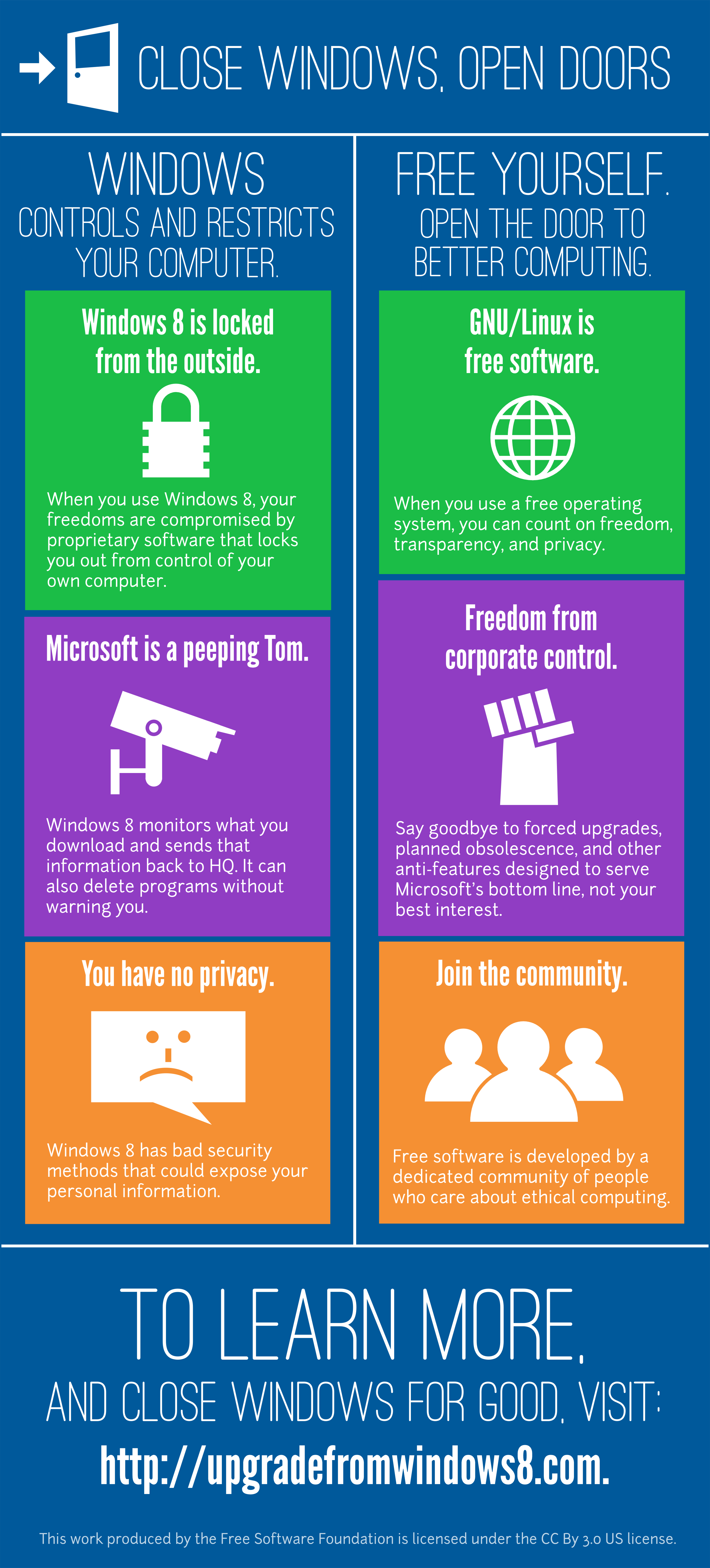 The freedom to inspect and improve the source code is crucial to the educational and research mission of a world class university. ## Scheduled talk – I, Evan Misshula http://EvanMisshula.github.io will be giving a public talk specifically covering a tool for reproducible research on November 5, 2014 http://www.meetup.com/New-York-Emacs-Meetup/events/211960922/ # Free Software projects at the GC ## Commons in a box The CUNY Academic commons contributes to FREE Software by developing and maintaining the Commons in a box platform (http://commonsinabox.org) which creates a WordPress social network. Developers from the CUNY Academic commons have contributed features and bug fixes which have been incorporated upstream at both WordPress Plugins and BuddyPress. ## Open CUNY ### Mission OpenCUNY, the student-governed, open source, academic medium for The Graduate Center, CUNY community, where you can build the website of your dreams through a WordPress interface (http://opencuny.org/blog/). ### Current initiative In order to help OpenCUNY assess the current usages of OpenCUNY and plan for its next five years, they have launched OpenCUNY’s First Participant Survey here. Whether or not you’re on OpenCUNY, we encourage you to take 10-15 minutes of your time and share about your experience on digital platforms. ## CUNY Institute for Software Development CISDD’s mission is to promote economic development in New York City and encourage the growth of the New York software industry. CISDD was created by the Board of Trustees, as part of CUNY’s economic development initiative, in January of 2000. CISDD provides the software industry, as well as CUNY faculty and students, with opportunities to learn about cutting-edge software products and methodologies. CISDD is particularly interested in promoting work on core and new software technologies, including: operating system enhancements, server-side software, Linux, security issues with software, distributed computing, logic and visualization. (http://www.cisdd.org/about.php) ## Free research code The research labs of at least four professors of Computer Science make regular contribution to FOSS projects. ### The Discrete Imaging and Graphics Group Led by Professor Gabor T. Herman this group has developed SNARK09 (http://www.dig.cs.gc.cuny.edu/software/snark09/) which is a programming system for the reconstruction of 2D images from 1D projections. It is designed to help researchers interested in developing and evaluating reconstruction algorithms. In the area of image reconstruction, researchers often desire to compare two or more reconstruction techniques and assess their relative merits. SNARK09 provides a uniform framework in which to implement algorithms and evaluate their performance. SNARK09 has been designed to treat both parallel and divergent projection geometries and can create test data for use by reconstruction algorithms. A number of frequently used reconstruction algorithms are incorporated. ### Big Spatial Data Jiangting Zhang has a series of online demos and research codes in the exciting interactive spatial data visualization and parallel computation (http://www-cs.engr.ccny.cuny.edu/~jzhang/LabSoftDemos.htm). ### Pattern recognition Computer Science Executive Officer has numerous research publications and teaching materials available on http://haralick.org. Research code for his cutting edge linear and non-linear manifold clustering algorithm is available at https://github.com/wildart/LMCLUS.jl and https://github.com/wildart/ManifoldLearning.jl. ### Data Visualization Recent faculty addition Lev Manovich has released two new important visualizations in 2014, *SelfieCity* and The Exceptional and the Everyday: 144 hours in Kiev. Selfie City (http://selfiecity.net) investigates the style of self-portraits (selfies) in five cities across the world. In an important step toward reproducitbility, the interactive selfiexploratory allows you to navigate the whole set of 3200 photos. In the The Exceptional and the Everyday: 144 hours in Kiev (http://www.the-everyday.net) uses computational and data visualization techniques to explore 13,208 Instagram images shared by 6,165 people in the central area of Kiev during 2014 Ukrainian revolution (February 17 – February 22, 2014). All photos and their metadata are available on the site. ## GC Digital Fellows workshops There are a free series of workshops open to the CUNY GC community many of which concentrate on building open educational resources. The schedule is available at https://digitalfellows.commons.gc.cuny.edu/workshops/. These include workshops on WordPress, Python, command line tools, git and data visualization. Based in the GC Digital Scholarship Lab, the GC Digital Fellows Program operates as an in-house think-and-do tank for digital projects, connecting Fellows to digital initiatives throughout The Graduate Center. Digital Fellows utilize a team-based approach as they explore creative solutions for projects that can be implemented in a collaborative fashion. In the process, the Program helps build out “The Digital GC” – a vision of the Graduate Center that incorporates technology into its core research and teaching missions. Their reflections on this process can be found on their blog, Tagging the Tower (https://digitalfellows.commons.gc.cuny.edu/category/tagging-the-tower/) ## Institutionally supported student initiatives There were two student projects that came out of the Digital Praxis seminar ### Social Paper The Social Paper won a Digital Humanities start up grant in 2013. The project aims to create a social network that allows graduate students to share seminar papers, enabling students to collaborate and facilitate conversations across the disciplines. – See more at: http://www.gc.cuny.edu/News/GC-News/Detail?id=24347#sthash.otXe34Ib.dpuf ### DH Box Ready-to-go configurations of Omeka, NLTK, IPython, R Studio, and Mallet live in DH Box. Through this praxis friendly environment, professors and students have instant classroom access to a cadre of gold-standard DH tools. Professors will be able to launch a DH computer lab in just a few minutes and guarantee their students an ideal environment for hands-on learning. (http://dhbox.org/about/) This is accomplished by making a linux computing environment available over the web. Behind the scenes DH Box uses Docker () to allow multiple users and non-overlapping directory structures. # Free Software project not at the CUNY GC ## City College City College has become the host of the New York Linux Group. Their next meeting is August 21 (http://www.meetup.com/nylug-meetings/events/213604362/) ## Hunter college Carson Farmer (http://carsonfarmer.com/research/) has contributed to a number of Graphical Information System programs including GeoPandas (https://github.com/cfarmer). ## John Jay John Jay hosts NYC4Sec(http://www.meetup.com/NYC4SEC/) which is a computer security and forensics meetup in NYC. A number of its members have made contributions to the Volatility Project(https://code.google.com/p/volatility/). # Open educational resource ## Journal of Interactive Teaching and Pedagogy The CUNY Graduate Center is home to Journal of Interactive Teaching and Pedagogy. JiTP’s mission is to promote open scholarly discourse around critical and creative uses of digital technology in teaching, learning, and research. Educational institutions have often embraced instrumentalist conceptions and market-driven implementations of technology that overdetermine its uses in academic environments. Such approaches underestimate the need for critical engagement with the integration of technological tools into pedagogical practice. JITP endeavors to counter these trends by recentering questions of pedagogy in our discussions of technology in higher education. The journal will also work to change what counts as scholarship—and how it is presented, disseminated, and reviewed—by allowing contributors to develop their ideas, publish their work, and engage their readers using multiple formats. (https://jitp.commons.gc.cuny.edu/about-the-journal/) ## Futures Initiative Another exciting new open educational resource is the Futures Initiative (https://futures.commons.gc.cuny.edu). The Futures Initiative is dedicated to creating and inspiring new methods of interdisciplinary and collaborative learning and pedagogy in order to stimulate institutional changes in higher education. Drawing upon and catalyzing the energy of CUNY faculty and students, the Futures Initiative seeks to explore new models for empowering the next generation of college professors to teach and engage in research most effectively in our modern age. The Futures Initiative encourages peer-to-peer pedagogies that support open and connected forms of learning, experimentation, and multimedia publication. Housed at the Graduate Center and extending throughout the CUNY system, the Futures Initiative serves as a model for innovation and aims to inspire public reinvestment in higher education and in our collective future as a society. One of the many innovative projects is a new course on the Future of Higher Ed taught by Futures Initiative Director Dr. Cathy N. Davidson and former CUNY-GC President William Kelley. The course has a public collaborative syllabus (https://docs.google.com/document/d/1hlbAHk_7GQ0o0pTJCozROya956M1CXYeChBPuBpyqsI/edit). Information about the course and open materials are available at (https://futures.commons.gc.cuny.edu/2014/10/05/crowdsourced-syllabus-mapping-the-futures-of-higher-education-teaching-learning-and-research-in-the-age-of-google/) # Open educational projects not at the CUNY GC ## Baruch college There is a Free and Open Source blog that has started at Baruch (http://blogs.baruch.cuny.edu/foss/). Baruch also has a detailed guide to using Open Source mapping software (http://www.baruch.cuny.edu/geoportal/practicum/). ## Macaulay honors college The Macaulay Honors College has produced a series of videos and a website (http://macaulay.cuny.edu/eportfolios/scienceforward/videos/) which informs citizens on scientific issues. This was highlighted on this group just yesterday (https://commons.gc.cuny.edu/groups/open-education-at-cuny/forum/topic/new-science-oer/). ## Brooklyn College Samir Chopra, a military historian wrote a relatively early treatment of the philosophical implications of FREE software. It is available at http://epicenter.media.mit.edu/~mako/foss-reading/DLbook.pdf ## College of Staten Island Professor Roy Vanegas has made his course on Web Design, Graphics, & Theory available on the web as an Open Educational Resource (http://roy.vanegas.org/teaching/at_csi/com_370/). Michael Mandberg co-authored a FREE book about Media Design using the Adobe Creative Suite (http://digital-foundations.net/). The book is from 2009, and was the first CC licensed book put out by Pearson, and the first (and maybe still only) design text under a CC license. Also, The Social Media Reader is available under its CC license https://archive.org/details/TheSocialMediaReader And Professor Mandberg has written about my use of CC and work in Free Culture in his chapter in TSMR. ## Queens College Queens College of the City University of New York announced May 14, 2014 that Douglas Rushkoff, the famed cyberculture expert who originated concepts such as “viral media” and “social currency,” will be joining its faculty. This marks the first full-time academic role for the prolific media theorist, award-winning author, and documentarian, who is considered one of the most influential thinkers of the digital age. Starting this August, he will help lead the development of a new Master of Arts in Media Studies program that will address the technological and market forces that dominate our daily lives. His book titled Open Source Democracy is available here (http://www.rushkoff.com/open-source-democracy/).
test markdown
# Open Education
Open Education is a term to describe the use of freely transferable
educational resources (<https://wiki.creativecommons.org/What_is_OER%3F>
and <http://en.wikipedia.org/wiki/Open_education>). These materials and
their use predate both invention (1968) and widespread consumer and
commercial use of the internet (1994). However, with the adoption of
the Internet and the increasing availability of valuable educational
resources distributed in much the same way as FREE and Open Source
Software (FOSS), the movement has gained significant institutional
backing, materials and momentum.
<a href=”https://foss.commons.gc.cuny.edu/files/2014/10/intro.png”><img class=”alignnone size-medium wp-image-5″ src=”https://foss.commons.gc.cuny.edu/files/2014/10/intro-300×168.png” alt=”intro” width=”300″ height=”168″ /></a>
# City University of New York
Today’s City University of New York dates back to the 1847 founding of
the Free Academy by Townsend Harris, an early champion of public
education and a pioneering diplomat who was the United States’ first
ambassador to Japan. With an inaugural class of 143 academically
qualified young men, the Academy set upon a mission to, in Harris’
words, “let the children of the rich and the poor take their seats
together and know of no distinction save that of industry, good
conduct, and intellect.” The Academy quickly grew in reputation and
enrollment and, as a new century approached, plans were approved for
an expansive neo-Gothic campus uptown for what became known as the
College of the City of New York. Twenty years after the first young
men entered the Academy, a separate school for the education of
teachers, the Female Normal and High School, later renamed Hunter
College in honor of its founder Thomas Hunter, offered the same higher
education opportunities to women. (<http://www.cuny.edu/about/history.html>)
The University includes eleven senior colleges,
seven community colleges, The Macaulay Honors College and five
graduate and professional schools, located throughout the city’s five
boroughs.
CUNY GC was founded in 1961 to primarily concentrate on the awarding of
doctoral degrees. The GC quickly expanded from 4 to 27 programs. It
currently offers 42 different PhD degrees. The Earth and Environmental
Sciences boasts a world renowned scholar on incarceration, Dr. Ruthie
Gilmore (<http://www.gc.cuny.edu/Faculty/Core-Bios/Ruth-Wilson-Gilmore>)
and the LIS Center (<http://www.gc.cuny.edu/liscenter>) whose mission is
to explicitly study inequality.
<a href=”https://foss.commons.gc.cuny.edu/files/2014/10/nypl-cuny.jpg”><img class=”alignnone size-medium wp-image-6″ src=”https://foss.commons.gc.cuny.edu/files/2014/10/nypl-cuny-300×168.jpg” alt=”nypl-cuny” width=”300″ height=”168″ /></a>
# Open Education at CUNY
Clearly the institutional mission of CUNY and Open Education have much
in common. There have been some pioneering efforts in FREE software
and Open Education at CUNY and much more to come. Their are two
flavors of CUNY’s contributions. First CUNY professors, administrators and students
contribute to and maintain FOSS projects. Second CUNY professors and
administrators make public Free Educational Resources which are not FREE software.
Also there are projects that have their nexus at the Graduate Center
and a wide variety of projects in the public interest which occur
outside of the GC. I am writing about the ones I know. I am hoping
that this group can correct my inevitable oversights and omissions.
Most of the projects at the Graduate Center I describe are programs
with whom I am lucky enough to have had some interaction. To find the
programs at other colleges, I searched for the college name along with
linux, FREE software and Open Source. Apologies for any omissions.
# Reproducible research
Producing new knowledge compels us to include another emerging
movement in education, that of Reproducible Research. To define yet
another term, this is the ability to reproduce published results.
There are some fairly shocking data on how much of current research
are not reproducible. In 2012, a survey done for Nature found that 47
out of 53 medical research papers on the subject of cancer were
irreproducible
(<http://www.nature.com/nature/journal/v483/n7391/full/483531a.html>).
Researchers explained in a 2006 study that, of 249 data sets from
American Psychology Association (APA) empirical articles, 73% of
contacted authors did not respond with their data over a 6-month
period. (<http://www.ncbi.nlm.nih.gov/pubmed/17032082>)
## Elements of reproducible research
– using research code that can be inspected
– publishing all code that manipulates data
– giving access to data that is used produce any published figures
– giving specifications for any library configuration
– making available any sensor data that was used to create data
## Free Software
<div class=”quote:”>’Free software’ means software that respects users’ freedom and
community. Roughly, it means that the users have the freedom to run,
copy, distribute, study, change and improve the software. Thus, “free
software” is a matter of liberty, not price. To understand the
concept, you should think of “free” as in “free speech,” not as in
“free beer”.</div>
<a href=”https://foss.commons.gc.cuny.edu/files/2014/10/win8_infographic_final.png”><img class=”alignnone size-medium wp-image-7″ src=”https://foss.commons.gc.cuny.edu/files/2014/10/win8_infographic_final-135×300.png” alt=”win8_infographic_final” width=”135″ height=”300″ /></a>
The freedom to inspect and improve the source code is crucial to the
educational and research mission of a world class university.
## Scheduled talk
– I, Evan Misshula <http://EvanMisshula.github.io> will be giving a
public talk specifically covering a tool for reproducible
research on November 5, 2014
<http://www.meetup.com/New-York-Emacs-Meetup/events/211960922/>
# Free Software projects at the GC
## Commons in a box
The CUNY Academic commons contributes to FREE Software by developing
and maintaining the Commons in a box platform
(<http://commonsinabox.org>) which creates a WordPress social network.
Developers from the CUNY Academic commons have contributed features
and bug fixes which have been incorporated upstream at both WordPress
Plugins and BuddyPress.
## Open CUNY
### Mission
OpenCUNY, the student-governed, open source, academic medium for The
Graduate Center, CUNY community, where you can build the website of
your dreams through a WordPress interface (<http://opencuny.org/blog/>).
### Current initiative
In order to help OpenCUNY assess the current usages of OpenCUNY and plan for
its next five years, they have launched OpenCUNY’s First Participant
Survey here. Whether or not you’re on OpenCUNY, we encourage you to
take 10-15 minutes of your time and share about your experience on
digital platforms.
## CUNY Institute for Software Development
CISDD’s mission is to promote economic development in New York City
and encourage the growth of the New York software industry. CISDD was
created by the Board of Trustees, as part of CUNY’s economic
development initiative, in January of 2000. CISDD provides the
software industry, as well as CUNY faculty and students, with
opportunities to learn about cutting-edge software products and
methodologies.
CISDD is particularly interested in promoting work on core and new
software technologies, including: operating system enhancements,
server-side software, Linux, security issues with software,
distributed computing, logic and visualization.
(<http://www.cisdd.org/about.php>)
## Free research code
The research labs of at least four professors of Computer Science make regular
contribution to FOSS projects.
### The Discrete Imaging and Graphics Group
Led by Professor Gabor T. Herman this group has developed SNARK09
(<http://www.dig.cs.gc.cuny.edu/software/snark09/>) which is a
programming system for the reconstruction of 2D images from 1D
projections. It is designed to help researchers interested in
developing and evaluating reconstruction algorithms. In the area of
image reconstruction, researchers often desire to compare two or more
reconstruction techniques and assess their relative merits. SNARK09
provides a uniform framework in which to implement algorithms and
evaluate their performance. SNARK09 has been designed to treat both
parallel and divergent projection geometries and can create test data
for use by reconstruction algorithms. A number of frequently used
reconstruction algorithms are incorporated.
### Big Spatial Data
Jiangting Zhang has a series of online demos and research codes in the
exciting interactive spatial data visualization and parallel computation
(<http://www-cs.engr.ccny.cuny.edu/~jzhang/LabSoftDemos.htm>).
### Pattern recognition
Computer Science Executive Officer has numerous research publications
and teaching materials available on <http://haralick.org>. Research code
for his cutting edge linear and non-linear manifold clustering
algorithm is available at <https://github.com/wildart/LMCLUS.jl> and
<https://github.com/wildart/ManifoldLearning.jl>.
### Data Visualization
Recent faculty addition Lev Manovich has released two new important
visualizations in 2014, *SelfieCity* and *The Exceptional and the
Everyday: 144 hours in Kiev*. Selfie City (<http://selfiecity.net>)
investigates the style of self-portraits (selfies) in five cities
across the world. In an important step toward reproducitbility, the
interactive selfiexploratory allows you to navigate the whole set of
3200 photos. In the The Exceptional and the Everyday: 144 hours in
Kiev (<http://www.the-everyday.net>) uses computational and data
visualization techniques to explore 13,208 Instagram images shared by
6,165 people in the central area of Kiev during 2014 Ukrainian
revolution (February 17 – February 22, 2014). All photos and their
metadata are available on the site.
## GC Digital Fellows workshops
There are a free series of workshops open to the CUNY GC community
many of which concentrate on building open educational resources. The
schedule is available at
<https://digitalfellows.commons.gc.cuny.edu/workshops/>. These include
workshops on WordPress, Python, command line tools, git and data
visualization.
Based in the GC Digital Scholarship Lab, the GC Digital Fellows
Program operates as an in-house think-and-do tank for digital
projects, connecting Fellows to digital initiatives throughout The
Graduate Center. Digital Fellows utilize a team-based approach as they
explore creative solutions for projects that can be implemented in a
collaborative fashion. In the process, the Program helps build out
“The Digital GC” – a vision of the Graduate Center that incorporates
technology into its core research and teaching missions. Their
reflections on this process can be found on their blog, Tagging the
Tower (<https://digitalfellows.commons.gc.cuny.edu/category/tagging-the-tower/>)
## Institutionally supported student initiatives
There were two student projects that came out of the Digital Praxis seminar
### Social Paper
The Social Paper won a Digital Humanities start up grant in 2013. The
project aims to create a social network that allows graduate students
to share seminar papers, enabling students to collaborate and
facilitate conversations across the disciplines. – See more at:
<http://www.gc.cuny.edu/News/GC-News/Detail?id=24347#sthash.otXe34Ib.dpuf>
### DH Box
Ready-to-go configurations of Omeka, NLTK, IPython, R Studio, and
Mallet live in DH Box. Through this praxis friendly environment,
professors and students have instant classroom access to a cadre of
gold-standard DH tools. Professors will be able to launch a DH
computer lab in just a few minutes and guarantee their students an
ideal environment for hands-on learning. (<http://dhbox.org/about/>)
This is accomplished by making a linux computing environment available
over the web. Behind the scenes DH Box uses Docker () to allow
multiple users and non-overlapping directory structures.
# Free Software project not at the CUNY GC
## City College
City College has become the host of the New York Linux Group. Their next meeting
is August 21 (<http://www.meetup.com/nylug-meetings/events/213604362/>)
## Hunter college
Carson Farmer (<http://carsonfarmer.com/research/>) has contributed to a
number of Graphical Information System programs including GeoPandas
(<https://github.com/cfarmer>).
## John Jay
John Jay hosts NYC4Sec(<http://www.meetup.com/NYC4SEC/>) which is a
computer security and forensics meetup in NYC. A number of its
members have made contributions to the Volatility
Project(<https://code.google.com/p/volatility/>).
# Open educational resource
## Journal of Interactive Teaching and Pedagogy
The CUNY Graduate Center is home to Journal of Interactive Teaching
and Pedagogy. JiTP’s mission is to promote open scholarly discourse
around critical and creative uses of digital technology in teaching,
learning, and research. Educational institutions have often embraced
instrumentalist conceptions and market-driven implementations of
technology that overdetermine its uses in academic environments. Such
approaches underestimate the need for critical engagement with the
integration of technological tools into pedagogical practice. JITP
endeavors to counter these trends by recentering questions of pedagogy
in our discussions of technology in higher education. The journal will
also work to change what counts as scholarship—and how it is
presented, disseminated, and reviewed—by allowing contributors to
develop their ideas, publish their work, and engage their readers
using multiple
formats. (<https://jitp.commons.gc.cuny.edu/about-the-journal/>)
## Futures Initiative
Another exciting new open educational resource is the Futures
Initiative (<https://futures.commons.gc.cuny.edu>). The Futures
Initiative is dedicated to creating and inspiring new methods of
interdisciplinary and collaborative learning and pedagogy in order to
stimulate institutional changes in higher education. Drawing upon and
catalyzing the energy of CUNY faculty and students, the Futures
Initiative seeks to explore new models for empowering the next
generation of college professors to teach and engage in research most
effectively in our modern age. The Futures Initiative encourages
peer-to-peer pedagogies that support open and connected forms of
learning, experimentation, and multimedia publication. Housed at the
Graduate Center and extending throughout the CUNY system, the Futures
Initiative serves as a model for innovation and aims to inspire public
reinvestment in higher education and in our collective future as a
society.
One of the many innovative projects is a new course on the Future of
Higher Ed taught by Futures Initiative Director Dr. Cathy N. Davidson
and former CUNY-GC President William Kelley. The course has a public
collaborative syllabus
(<https://docs.google.com/document/d/1hlbAHk_7GQ0o0pTJCozROya956M1CXYeChBPuBpyqsI/edit>).
Information about the course and open materials are available at
(<https://futures.commons.gc.cuny.edu/2014/10/05/crowdsourced-syllabus-mapping-the-futures-of-higher-education-teaching-learning-and-research-in-the-age-of-google/>)
# Open educational projects not at the CUNY GC
## Baruch college
There is a Free and Open Source blog that has started at Baruch
(<http://blogs.baruch.cuny.edu/foss/>). Baruch also has a detailed guide
to using Open Source mapping software
(<http://www.baruch.cuny.edu/geoportal/practicum/>).
## Macaulay honors college
The Macaulay Honors College has produced a series of videos and a
website (<http://macaulay.cuny.edu/eportfolios/scienceforward/videos/>)
which informs citizens on scientific issues. This was highlighted on this
group just yesterday (<https://commons.gc.cuny.edu/groups/open-education-at-cuny/forum/topic/new-science-oer/>).
## Brooklyn College
Samir Chopra, a military historian wrote a relatively early treatment of the philosophical
implications of FREE software. It is available at <http://epicenter.media.mit.edu/~mako/foss-reading/DLbook.pdf>
## College of Staten Island
Professor Roy Vanegas has made his course on Web Design, Graphics, &
Theory available on the web as an Open Educational Resource
(<http://roy.vanegas.org/teaching/at_csi/com_370/>). Michael Mandberg
co-authored a FREE book about Media Design using the Adobe Creative
Suite (<http://digital-foundations.net/>). The book is from 2009, and
was the first CC licensed book put out by Pearson, and the first (and
maybe still only) design text under a CC license.
Also, The Social Media Reader is available under its CC license
<https://archive.org/details/TheSocialMediaReader>
And Professor Mandberg has written about my use of CC and work in Free
Culture in his chapter in TSMR.
## Queens College
Queens College of the City University of New York announced May 14, 2014 that
Douglas Rushkoff, the famed cyberculture expert who originated
concepts such as “viral media” and “social currency,” will be joining
its faculty. This marks the first full-time academic role for the
prolific media theorist, award-winning author, and documentarian, who
is considered one of the most influential thinkers of the digital
age. Starting this August, he will help lead the development of a new
Master of Arts in Media Studies program that will address the
technological and market forces that dominate our daily lives.
His book titled Open Source Democracy is available here
(<http://www.rushkoff.com/open-source-democracy/>).
test google docs
Here is the test google docs presentation
http://docs.google.com/present/view?id=dcdjz44h_20234b74rd6
https://docs.google.com/present/view?id=ajb9nwm5m966_201f9w46cch
OLD LINK
IMPORTED WITH LINK FROM PUBLISH TO THE WEB
LINK FROM SHARE MENU
my title
Comments closed
Morbi orci sem, pulvinar at venenatis egestas, ullamcorper id mauris. Suspendisse molestie, leo nec mattis ultricies, lectus justo commodo sapien, in posuere nibh justo sit amet neque. Sed fermentum nisl in lectus posuere elementum. Sed faucibus volutpat vestibulum. Maecenas suscipit, ligula nec molestie lobortis, ipsum sem ullamcorper ligula, vitae tempor dui neque eu nibh. Maecenas velit felis, venenatis id accumsan.
Post with Trackbacks
Nullam nec felis massa, vitae laoreet est. In in justo vitae sapien lobortis rutrum. Fusce turpis turpis, vestibulum vel tempor et, blandit eget est. Nunc et enim arcu, eu molestie elit. Duis varius orci vel quam faucibus adipiscing. Nullam rhoncus, elit non tempor suscipit, urna orci vehicula velit, aliquet vulputate lacus est et dui. Pellentesque tempus vulputate viverra. Nulla tristique.
Post with comments
Integer interdum nulla et nunc sagittis tincidunt. Curabitur lobortis nunc sit amet enim ultrices lobortis a et dolor. Sed faucibus volutpat neque quis adipiscing. Donec purus urna, ornare id varius auctor, commodo at metus. Nullam tincidunt pellentesque malesuada. Nam lorem justo, lobortis a convallis vitae, luctus quis mi. Sed et condimentum erat. Donec tempus ullamcorper nunc nec interdum. Suspendisse cursus, purus id volutpat lacinia, mauris enim pharetra purus, a mollis tellus libero eu nunc. Ut suscipit dictum cursus. Proin et est felis, at dictum sapien. Integer venenatis nunc lobortis odio pretium bibendum aliquet nisi ornare. Cras interdum turpis sed velit lacinia consequat.
Post Thumbnail
Vestibulum eget diam sed erat ultrices vestibulum. Vivamus interdum ipsum nec nibh dapibus nec ornare eros venenatis. Nunc sed vestibulum justo. Mauris vitae elit nec ipsum facilisis scelerisque. Ut eget turpis enim, at viverra urna. Nam mattis eleifend urna, non hendrerit massa tempor eget. Praesent elementum, turpis non tincidunt porta, sapien arcu malesuada enim, at porttitor libero nulla molestie turpis. Vivamus libero orci, accumsan et tempus a, vestibulum nec orci. Mauris eget ante est. Suspendisse mollis euismod dapibus. Nunc varius aliquam pharetra. Suspendisse ultrices, nisl ut hendrerit posuere, dolor tortor congue nibh, at dictum sapien mi et leo. Curabitur a dignissim elit. Mauris semper tincidunt quam et gravida. Pellentesque eget varius sem. Curabitur ut mauris mauris. Cum sociis natoque penatibus et magnis dis parturient montes, nascetur ridiculus mus. Maecenas sit amet sapien quam, sed aliquet ligula.
Integer a tempor dolor. Duis lobortis scelerisque lectus at mattis. Morbi sagittis lacus id magna congue id faucibus lectus aliquam. Fusce blandit, lectus ut hendrerit pretium, lectus risus facilisis dui, vel varius risus libero ac diam. Aenean nisl ligula, semper vitae dictum et, sodales ut tellus. Donec at dui quis ante rutrum placerat at id sem. Nullam eleifend, nisl vitae volutpat adipiscing, tortor est tristique arcu, sed varius quam arcu sit amet magna. Aenean ullamcorper risus vel dolor tincidunt porttitor. Fusce tellus nibh, scelerisque quis condimentum sed, scelerisque eget felis. Ut eu sem ut massa dapibus ornare. Nulla congue viverra volutpat. Phasellus vestibulum diam eros, ac pellentesque libero. Integer eu nunc quis eros auctor porta. Donec non lectus ut arcu fringilla dignissim. Pellentesque vitae lorem at ipsum vehicula aliquam. Donec nec mi massa. Proin eu lorem purus.
Pellentesque a dui eget est euismod facilisis nec eu lacus. Nullam sodales adipiscing erat, ultrices sagittis libero porta sed. Phasellus eget condimentum erat. Fusce et lectus neque, sed varius purus. Sed tincidunt aliquet magna ac volutpat. Nullam sed mi sed eros mollis ultricies. Integer pellentesque tempus vestibulum. Praesent accumsan ultricies rutrum. Praesent semper, lectus vel dapibus viverra, nisl dolor hendrerit magna, vitae mollis risus odio eget nulla. Quisque commodo arcu id ante dignissim vestibulum.

